How to Read Nutrition Labels While Traveling: 5-Second Rule

TIRED OF CONSUMING EXTRA CALORIES WHILE TRAVELING ABROAD?
You’re standing in a Bulgarian grocery store at 2 PM. You skipped breakfast because your Airbnb had zero food. Your stomach is staging a revolt.
That protein bar screaming “18g PROTEIN!” looks like salvation. You grab it, pay, and devour it on the street.
Plot twist: You just consumed 34 grams of sugar. Your energy crashes harder than your travel budget after a weekend in Switzerland.
So how can you quickly navigate a foreign grocery while still making healthy decisions?

The Marketing Trap That’s Sabotaging Your Travel Energy
Foreign grocery stores are nutrition label minefields. You’re tired, hungry, and everything’s in another language.
The front of packages becomes your decoder ring. BIG mistake!!
Food companies spend millions making their front labels irresistible.
That “high protein” claim? Technically legal even when sugar dominates the ingredient list.
Why Reading Nutrition Labels Abroad Is Extra Tricky
I don’t think anyone loves reading nutrition labels even in their native language.
If you’re in a foreign grocery store, you’ll still see brands that say “high protein” in English because they want your attention…and money!
In other words, you shouldn’t just automatically put all your trust in the marketing of a company that wants you to quickly buy it.
Language Barriers Make Everything Harder
Bulgarian. Serbian. Thai. Good luck deciphering “протеин” when you’re hangry.
Google Translate camera becomes your best friend. But even that won’t save you from misleading front-of-package claims.
Different Labeling Standards = Confusion
EU labels list ingredients differently than US labels. Serving sizes vary wildly. What looks healthy in Denver might be a sugar bomb in Prague.
Some countries don’t require added sugar breakdowns. You’re flying blind unless you know what to look for.
Hunger Makes You Gullible
Low blood sugar = poor decision making.
Science fact: Hungry brains focus on immediate gratification, not long-term consequences.
That’s exactly when flashy packaging wins. Your rational brain checks out, marketing takes over.
So what do you do that won’t be overwhelming or take too much time?
The 5-Second Flip Test (Works in Any Language)
You don’t need to do a ton of math, waste a lot of time, or learn the local language.
Just take 5 seconds now and, if you spend multiple days in this country, you’ve established your new go-to brand!
Step 1: Ignore the Front Completely 🙈
Seriously. Pretend it doesn’t exist.
Marketing budgets vs. your health goals? Marketing wins every time if you play their game.
Step 2: Flip and Scan These Numbers First 🔍
Look for these in any language:
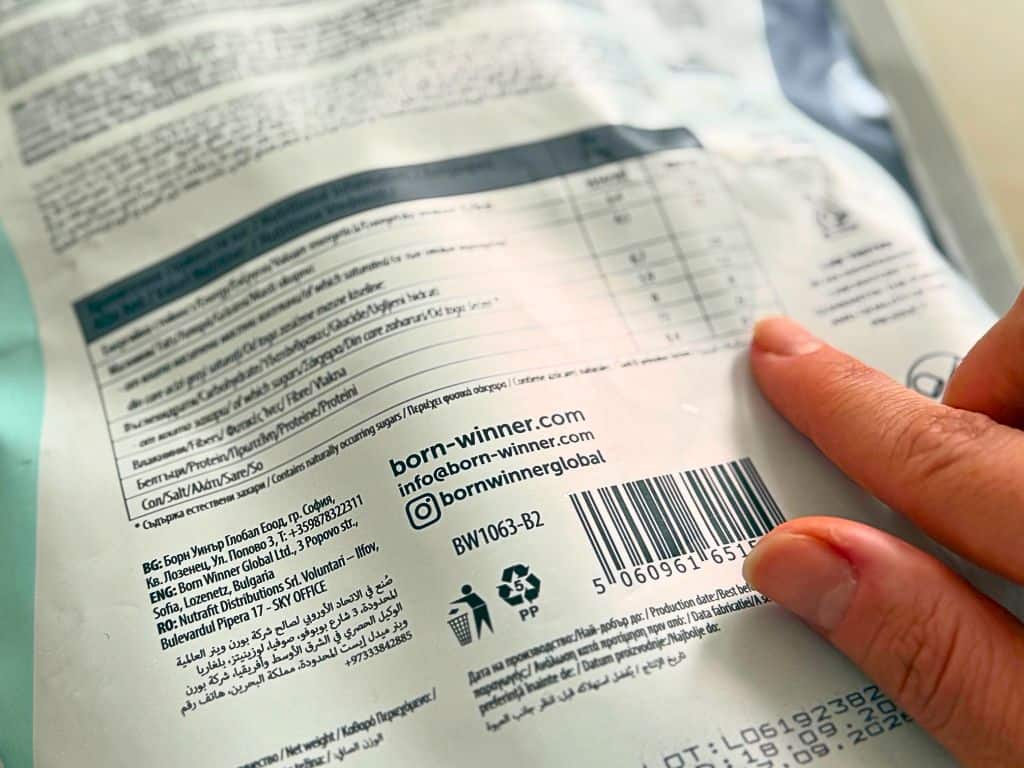
👉 Carbohydrate content: Look for numbers followed by “g” near words containing “carbohydrate,” “sugar,” “sucre,” “azúcar,” or “захар”
👉 Protein content: Usually listed something similar to “protein” in many languages
Ingredient list length: Fewer ingredients = better (universal rule)
Step 3: Apply the Protein-to-Sugar Ratio Rule ⚖️
With all the numbers listed, you’ll often want to compare just two of them to each other with a simple ratio rule:
18g protein + 34g sugar = PASS
20g protein + 12g sugar = WINNER!
Simple math: Protein grams should EQUAL OR EXCEED sugar grams.
In my personal experience, you’ll potentially find 3 bigger numbers in the same order from top-to-bottom: fat, sugar, protein.
Check the last number (protein) against the two above (fat content can also be sneaky!)

Step 4: Count Unpronounceable Ingredients 🧪
More than 5 chemical-sounding names? Put it back.
Your body doesn’t speak chemistry. Keep it simple, especially when you’re already dealing with travel stress.
Travel-Friendly Foods That Pass the Test
With different cuisines and food staples, what can you typically expect to find across borders for healthy options?
International Grocery Store Heroes 🏪
- Greek yogurt: Usually 15g+ protein, under 10g sugar
- Canned fish: Sardines and salmon travel well
- Oatmeal packets: Check for added sugar content first
Hotel Room Assembly Required 🏨
- Nut butter + fruit: Control your own sugar-to-protein ratio
- Protein powder + local milk: Know exactly what you’re getting
- Hard cheese + whole grain crackers: Satisfying and predictable
Airport and Train Station Wins ✈️
- Nuts and seeds: Ingredient list should be one item
- Hard-boiled eggs: Protein without the packaging lies
- Bananas: Nature’s original energy bar

When All Else Fails: Emergency Nutrition Strategies
Need less math and want someone to just give you the answer? Let’s make it even MORE simple! Because any intentional energy invested in your physical health is better than no regard at all.
The 3-Ingredient Rule 🥜
Can’t read the label? Count ingredients instead.
Three ingredients or fewer = probably safe. Almonds, sea salt, rosemary beats modified corn starch, natural flavoring, and 12 other chemicals.
Local Market Intelligence 🗣️
Ask other travelers in hostels and Facebook groups. They’ve made the same mistakes you’re about to make.
Google “healthy snacks [city name]” before grocery shopping. Local bloggers have done the legwork.
Pick Whole Foods
You can never go wrong with whole foods!
They don’t even have nutrition labels to read so you can avoid it entirely.

Budget for Quality
Your options might be limited and healthier options might be more costly (if you even find some good ones).
That €6 imported protein bar might be worth it for consistent energy.
Proactively pack your Suitcase 🆘
Stock your luggage with travel-friendly staples from home. Protein powder, nut butter packets, and emergency bars you trust.
Personally?
I frequently pack my own protein powders and bars that I’ve carefully selected. I don’t want to gamble on what quality I might find while visiting another city.

FAQ’s on Reading Nutrition Labels While Traveling
How do I calculate serving sizes when everything’s in different units?
Focus on ratios instead of absolute numbers. If protein-to-sugar looks good and the ingredient list is short, serving size matters less. Most “single serving” packages are actually 2-3 servings anyway.
When in doubt, eat half and see how you feel. Your energy levels will tell you more than any label calculation.
What if Google Translate can’t read the nutrition label clearly?
Look for visual cues and numbers first. Sugar content is usually a prominent number ending in “g.” Ingredient lists follow similar patterns globally – first ingredient = most abundant.
Ask locals or other travelers for help. Most people are happy to translate a simple food label. Hotel staff and hostel workers are particularly helpful resources.
Are organic or “natural” labels more trustworthy abroad?
Not necessarily. “Natural” means virtually nothing in most countries. Organic standards vary wildly between nations.
Stick to your 5-second flip test regardless of front-label claims. That organic protein bar can still pack 30g of “natural” sugar.
Should I just avoid packaged foods entirely while traveling?
Unrealistic for most travelers. Packaged foods offer convenience, shelf stability, and known nutrition when you’re constantly moving.
Aim for 80/20 balance. Fresh, local foods most of the time, reliable packaged options when needed. Perfect is the enemy of good when you’re living out of a backpack.
How do I handle nutrition labels in countries with completely different alphabets?
Numbers are universal. Look for patterns: grams (g), percentages (%), and numerical values near recognizable symbols.
Download translation apps before you travel. Google Translate camera mode works offline once you’ve downloaded the language pack. Preparation beats desperation in foreign grocery stores.

Final Thoughts on Reading Nutrition Labels While Traveling
Here’s the Rundown: Smart label reading saves your energy and your wallet while exploring the world. The 5-second flip test works whether you’re in Sofia or Singapore.
Don’t let marketing budgets derail your health goals. Front-of-package claims are designed to sell, not nourish. Your energy levels depend on what’s actually inside that wrapper.
Master these basics once, and grocery shopping becomes automatic – regardless of language barriers or cultural differences. Travel should energize you, not drain you through poor nutrition choices.
Ready to explore more ways to stay fit and healthy on your travels or plan epic adventures across the globe? Here are some ideas…
✴️Weightlifting While Traveling: Your Complete Guide to Maintaining Strength Anywhere.
✴️Ultimate Guide to Workout Supplements For Travel
✴️Best Healthy Snacks For Airports And Plane Trips (DIY + Packaged!)
Follow me on Instagram to follow my travel & fitness journey
